
Aluminum: The Versatile Base Metal
Aluminum itself is a lightweight, durable, and versatile metal valued for its excellent strength-to-weight ratio, corrosion resistance, and conductivity. In its pure form, aluminum is relatively soft, but it’s typically alloyed with other elements like silicon, magnesium, or copper to enhance specific properties for different applications.
The term “aluminum” refers to the base material itself, regardless of how it’s formed into final products. Aluminum can be processed using various methods including casting, rolling, drawing, forging, and extrusion. Each method imparts different characteristics to the final product, making it suitable for specific applications.
Casting
Rolling
Drawing
Forging
Extrusion
Alloying
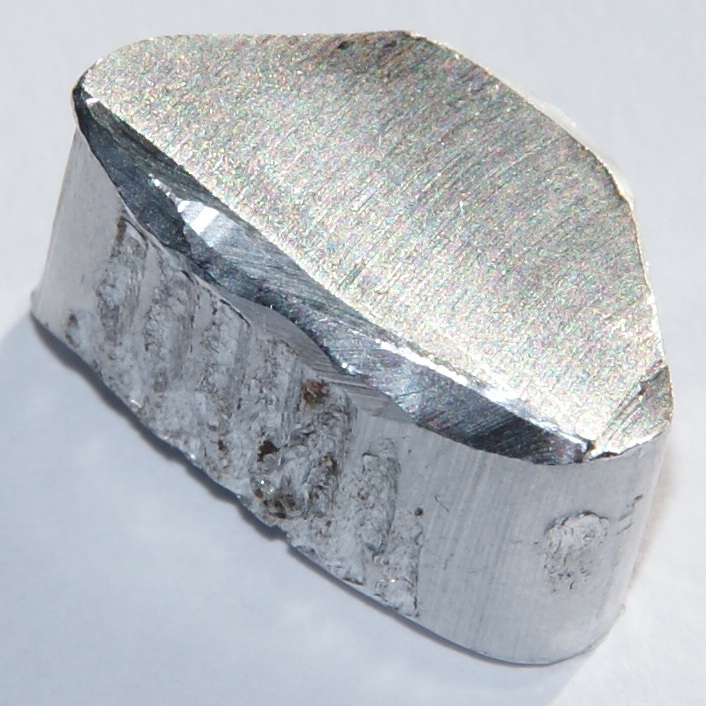
Aluminum in various forms and finishes
Extruded Aluminum: A Specific Manufacturing Process
Extruded aluminum refers to aluminum that has been shaped using a specific manufacturing process called extrusion. This process involves heating aluminum billets and forcing them through a die under high pressure to create objects with a fixed cross-sectional profile.
The extrusion process aligns the metal’s grain structure along the direction of extrusion, enhancing its tensile strength and mechanical properties. This makes extruded aluminum particularly suitable for load-bearing applications where strength and precision are critical.
The Extrusion Process Steps:
- 1 Heating aluminum billets to optimal temperature
- 2 Loading billets into the extrusion press
- 3 Forcing metal through a shaped die under high pressure
- 4 Cooling the extruded profile
- 5 Stretching to straighten and strengthen
- 6 Cutting to desired lengths
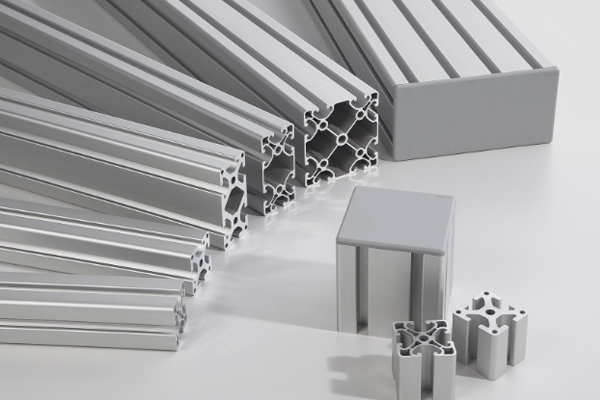
Extrusion process creating complex aluminum profiles
Key Differences Between Aluminum and Extruded Aluminum
Manufacturing Process
The fundamental difference lies in how each is produced. While “aluminum” can be formed by any number of methods, extruded aluminum specifically undergoes the extrusion process where solid aluminum billets are heated and forced through a die. This differs significantly from casting, which involves pouring molten aluminum into molds.
Mechanical Properties
Extruded aluminum typically exhibits superior mechanical properties compared to many other forms of aluminum, particularly cast aluminum. The extrusion process creates a fine-grained microstructure with grain alignment that enhances tensile strength. This makes extruded aluminum stronger and more durable than cast aluminum.
Shape and Design Limitations
Extruded aluminum is ideal for producing uniform, continuous shapes with consistent cross-sections, such as rods, tubes, and channels. However, it’s limited to shapes that maintain a consistent profile along their length. In contrast, other aluminum forming methods like casting can produce more complex three-dimensional geometries.
Surface Finish and Precision
Extruded aluminum is known for its smoother surface finish and excellent dimensional accuracy compared to cast aluminum, which typically has a rougher surface finish due to mold textures. The absence of porosity in extruded aluminum contributes to its higher structural integrity.
Applications
Extruded aluminum is commonly used in construction for window frames, railings, and structural components where strength and precision are critical. It’s also found in automotive structural components, frames, and crash management systems. Cast aluminum is typically used for more complex shapes like engine blocks.
Cost Considerations
While extrusion tooling can have higher upfront costs, extruded aluminum often provides better value in high-volume production due to its efficiency and minimal waste. Cast aluminum may be more cost-effective for complex, low-volume parts where tooling costs can be amortized over fewer units.
Advantages of Extruded Aluminum
- Enhanced mechanical properties due to grain alignment during extrusion
- High dimensional accuracy and consistent profiles
- Smoother surface finishes that often require minimal post-processing
- Efficiency in mass production of long, uniform sections
- Excellent strength-to-weight ratio for structural applications
- Good thermal and electrical conductivity
- Recyclable and sustainable manufacturing process
When to Choose Extruded Aluminum
Select extruded aluminum when your project requires:
- Long components with consistent cross-sections
- High strength-to-weight ratio
- Excellent dimensional precision
- Smooth surface finish with minimal post-processing
- Structural applications where load-bearing capacity is important
For applications requiring complex, three-dimensional shapes or where the component has varying cross-sections, other aluminum forming methods like casting might be more appropriate.
Conclusion
While all extruded aluminum is aluminum, not all aluminum products are extruded. The key difference lies in the manufacturing process and the resulting properties. Extruded aluminum offers superior strength, precision, and consistency for applications requiring these characteristics, while other forms of aluminum like cast aluminum are better suited for complex geometries.
Understanding this distinction ensures you select the right material for your specific application, optimizing both performance and cost-efficiency.
Featured Extruded Aluminum Product

Aluminum Profiles
Our high-quality T-slot aluminum extrusion is perfect for industrial automation frames, machine guards, workbenches, and custom structures. Made from premium 6063-T5 aluminum alloy, it offers excellent strength, corrosion resistance, and versatility.
Material
6063-T5 Aluminum
Dimensions
Customized
Slot Type
T-Slots
Finish
Anodized